
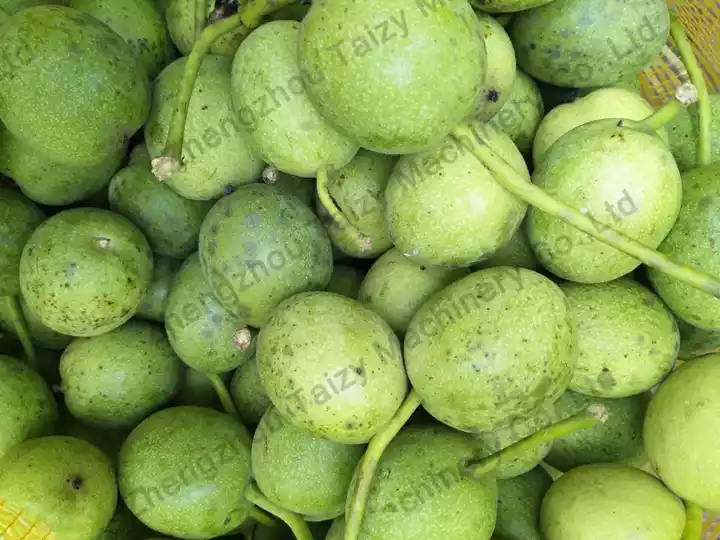
For walnut growers, cooperatives, and processing facilities, harvest season is both the most rewarding and the most stressful time of the year. Walnut trees produce their entire annual crop within a narrow window — typically 4 to 6 weeks in late summer and early autumn. During this period, tons of fresh green walnuts arrive at the processing facility daily, each covered in a thick, sticky green husk that must be removed quickly before it stains the shell and degrades kernel quality.
Manual husk removal is slow, labor-intensive, and simply cannot keep pace with peak harvest volumes. The solution is a high-capacity green walnut peeling machine integrated into a complete walnut processing line that turns the seasonal bottleneck into a smooth, continuous operation.
Understand the Seasonal Bottleneck
Walnut harvest is not spread evenly across the year. In most growing regions, 70–80% of the annual crop is harvested within a 2–3 week peak period. During this time, a medium-sized orchard can deliver 10–50 tons of green walnuts per day — all of which must be husked, washed, dried, and stored within hours of picking to prevent quality loss.
The green husk contains tannins and phenolic compounds that stain the walnut shell brown within 24–48 hours of harvest. Once stained, the walnuts fetch a lower market price. Additionally, warm, moist conditions inside the husk promote mold growth and kernel darkening — especially when temperatures exceed 32°C (90°F). The window for processing is short, and delays at any stage create a cascading backlog.
A green walnut peeling machine with sufficient capacity is the critical first step in breaking this bottleneck. Without it, harvest volumes overwhelm the facility, walnuts sit in piles waiting to be processed, and quality degrades by the hour.

Choose a Green Walnut Peeling Machine with the Right Capacity
Not all peeling machines are created equal. For peak harvest volumes, capacity is the deciding factor. A machine that handles 500 kg per hour may be adequate for off-peak operations, but it will create a crippling bottleneck when 20 tons of walnuts arrive in a single morning.
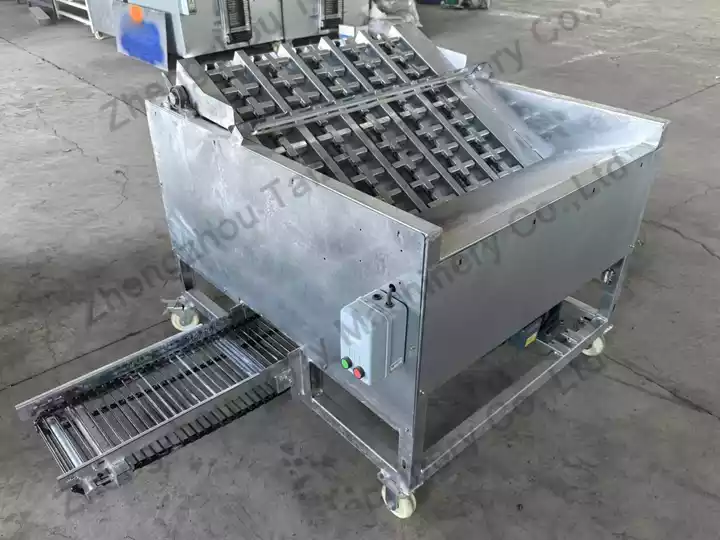
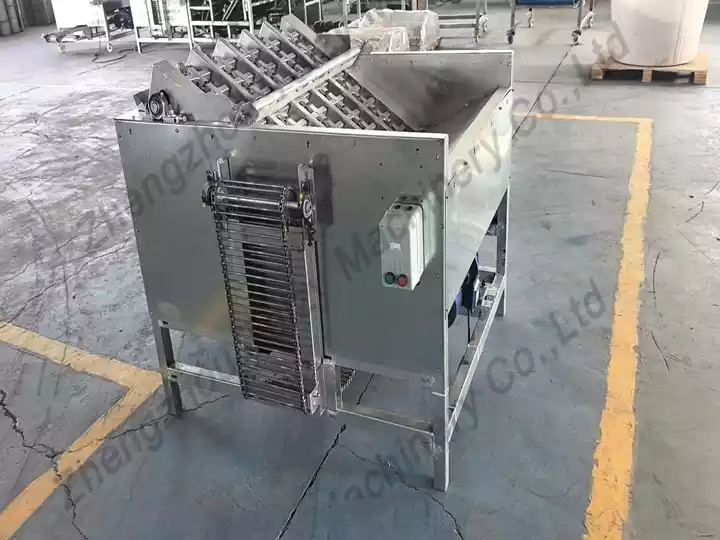
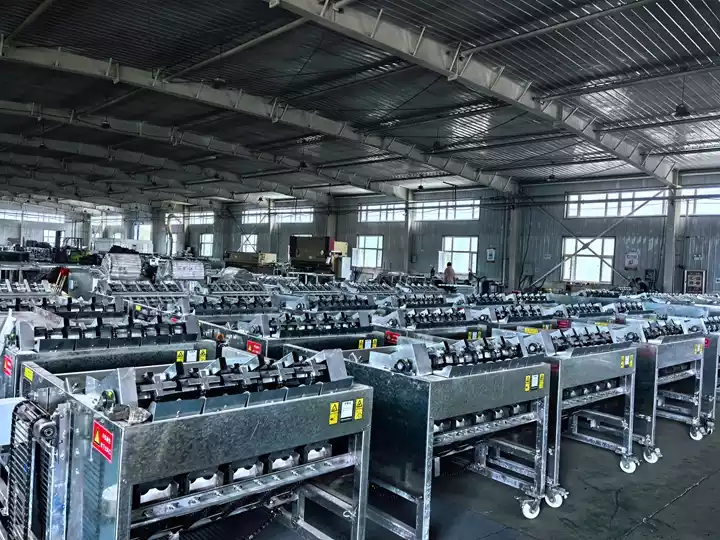
Our green walnut peeling machine is available in multiple configurations to match your harvest scale:
| ماڈل | گنجائش | Channels | Power | Best For |
|---|---|---|---|---|
| Medium (6-channel) | 3.5 tons/hour | 6 | 1.5 کلو واٹ | Small to medium processing facilities |
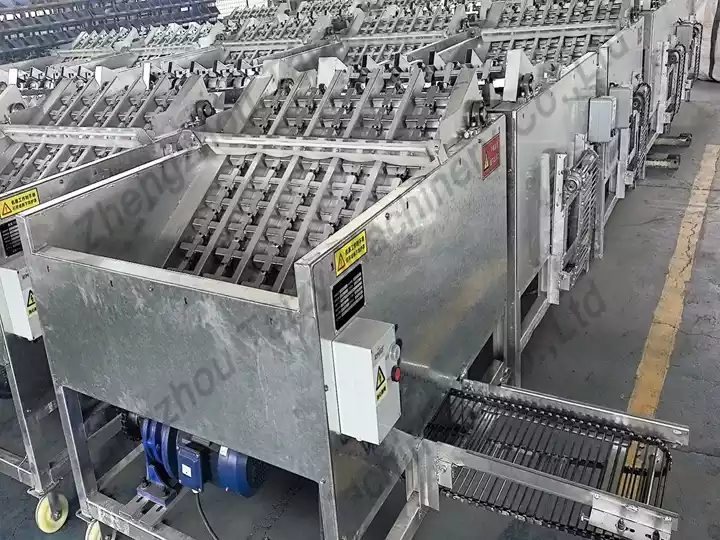
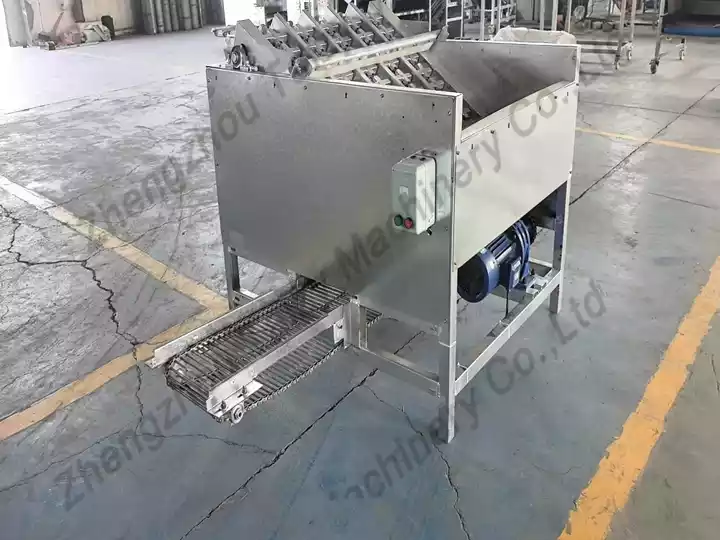
| Large (10-channel) | 6–8 tons/hour | 10 | 2.2 کلو واٹ | Large cooperatives and commercial processors |
| Tractor-driven mobile | 3.5 tons/hour | — | PTO drive | Orchard-side field processing |
The 10-channel large model processes over 6 tons per hour — enough to handle the daily intake of a 500-hectare orchard during peak harvest. With this capacity, a facility can process a full truckload of green walnuts in under 3 hours, eliminating waiting piles and quality degradation.
Dry Peeling Eliminates Water Waste and Waiting Time
Traditional green walnut processing often involves soaking walnuts in water or using high-pressure water jets to soften the husk before peeling. This approach has serious drawbacks during peak season:
- Water consumption: Thousands of liters per day for large volumes.
- Wastewater disposal: Contaminated water requires treatment before discharge.
- Extended processing time: Soaking adds hours to the cycle.
- Extra drying load: Wet walnuts require longer drying times.
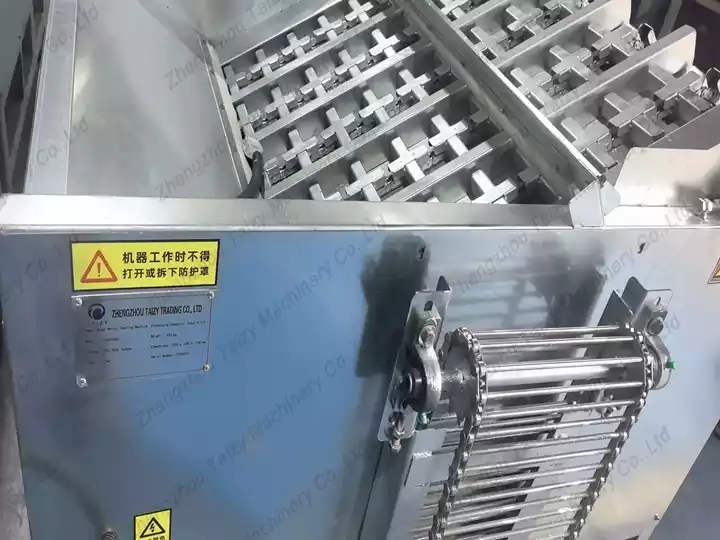
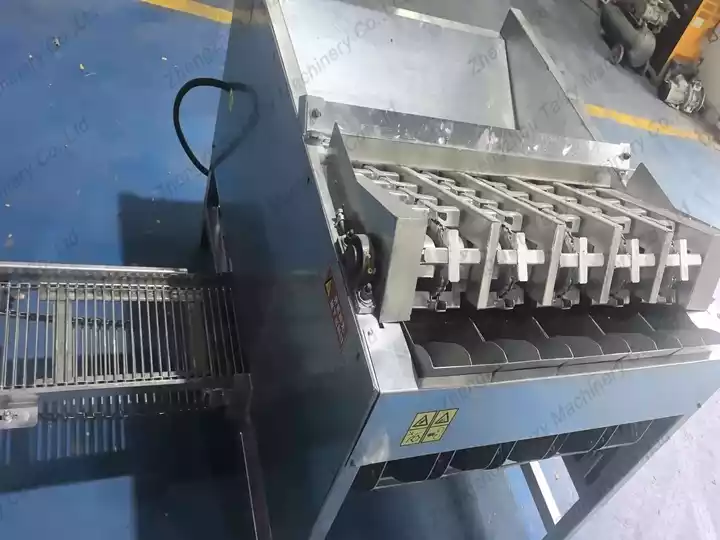
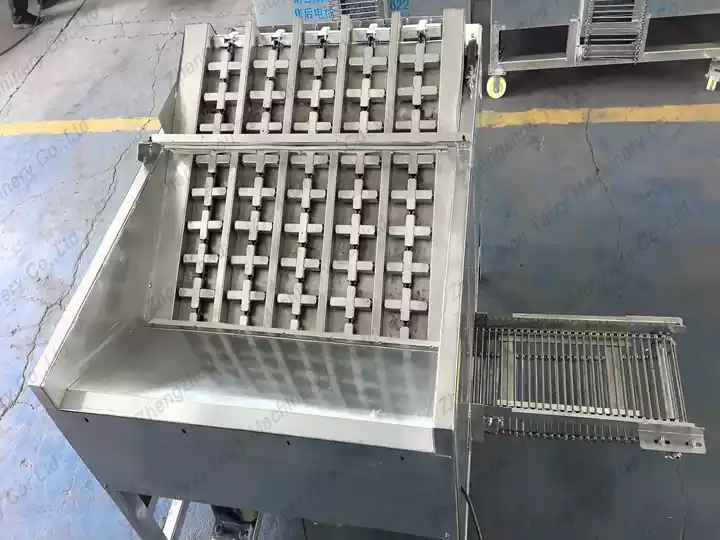
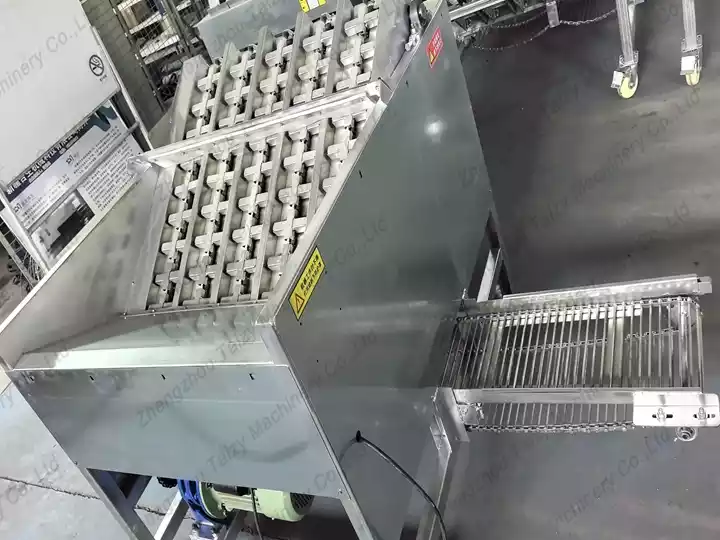
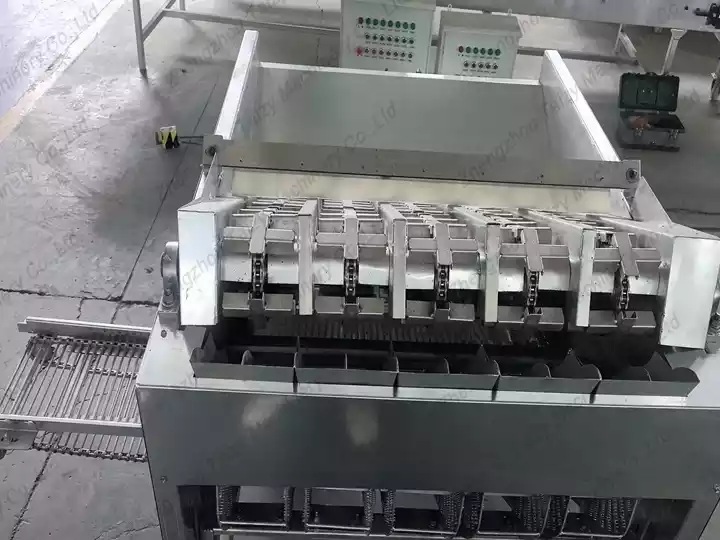
Our green walnut peeling machine uses a completely dry peeling process. It does not require water, soaking, or pre-treatment. The machine feeds walnuts through independent channels where 45° stainless steel cutting blades slice the green husk away as the walnuts rotate and advance. The husk is separated and discharged as dry waste — which can be composted or used as organic fertilizer — while the clean walnuts exit the machine ready for the next stage.
Dry peeling saves water, eliminates wastewater, and removes the soaking delay — cutting total processing time by 30–50% compared to wet methods.
Independent Channels Prevent Pile-Ups and Damage
One of the most common problems with conventional peeling machines is pile-up feeding. When walnuts are dumped into a hopper and pushed through a single opening, they jam, crush each other, and create uneven peeling. Damaged walnuts have lower market value, and jams require manual clearing — costing precious time during peak harvest.
Our green walnut peeling machine solves this with an independent multi-channel feeding system:
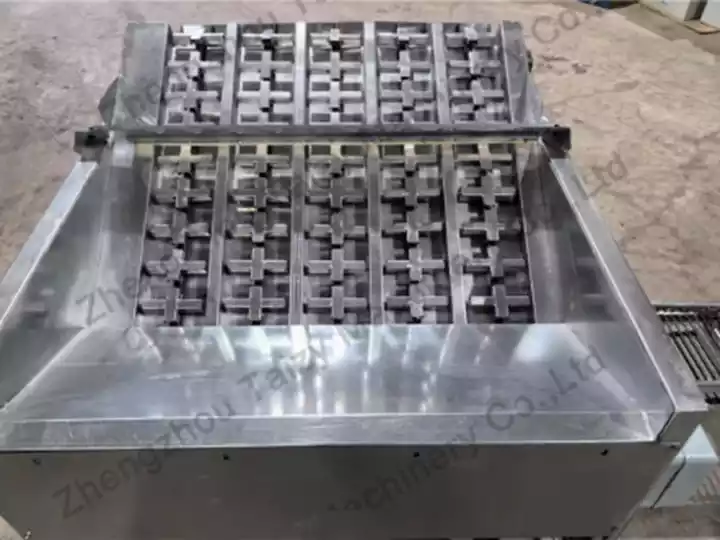
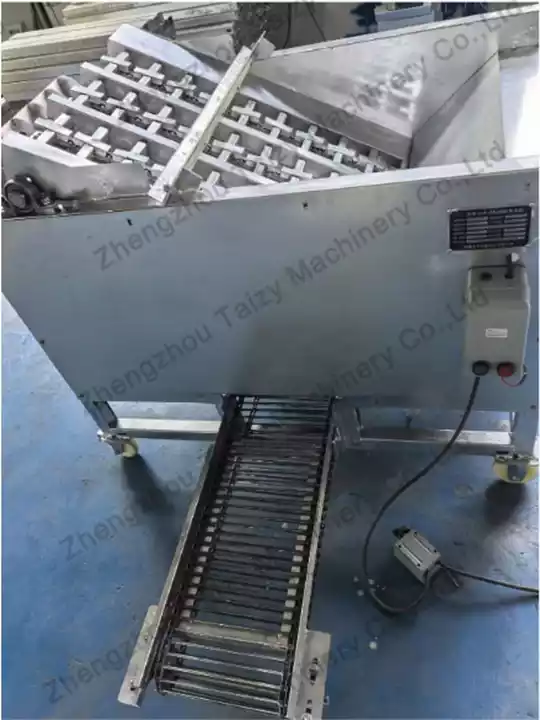
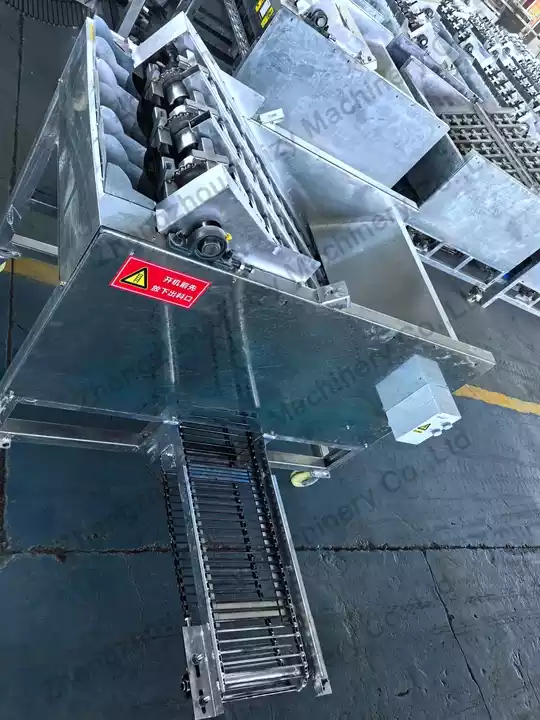
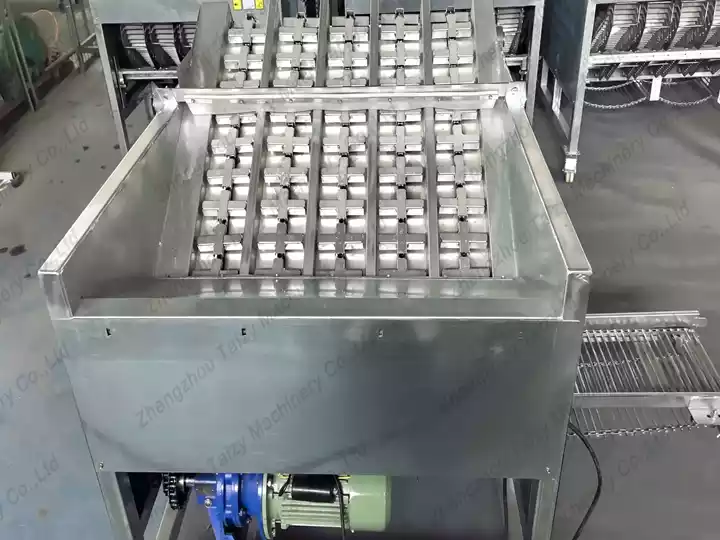
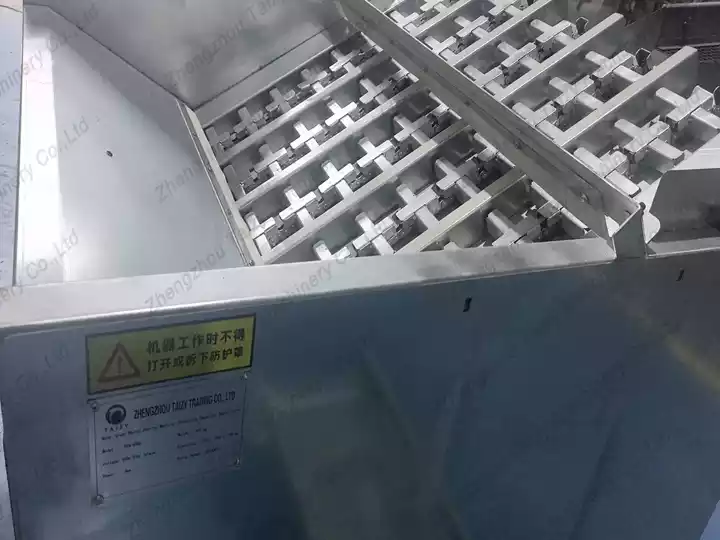
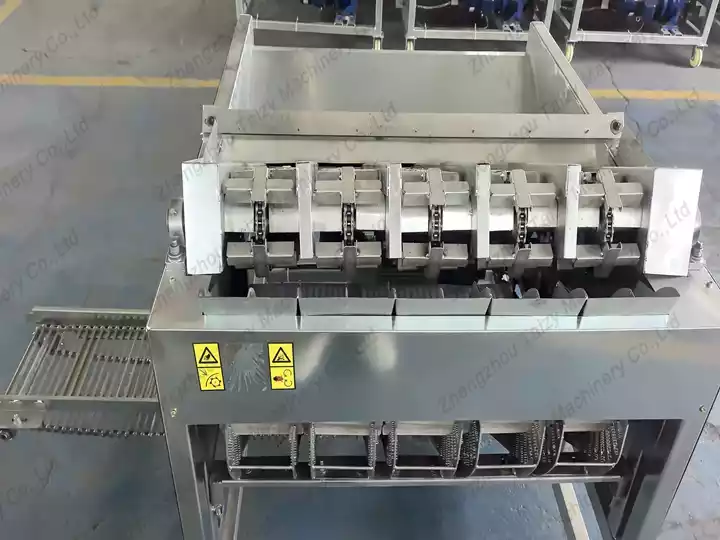
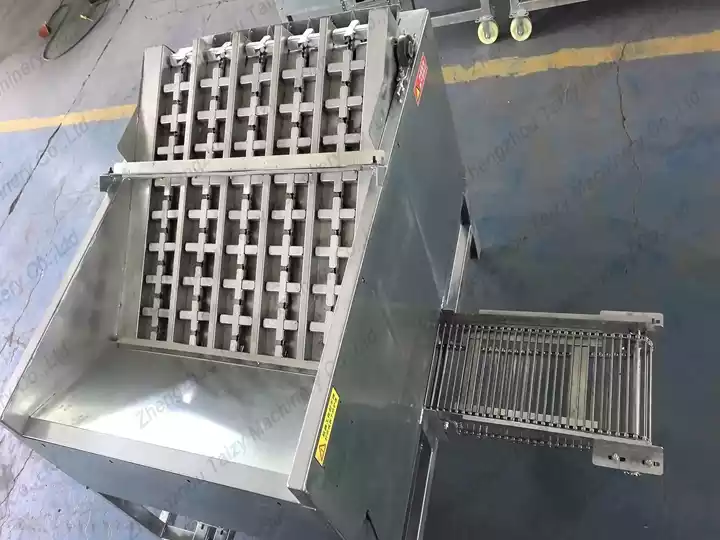
- The 10-channel model uses 5 feed chains with 19 cross-shaped paddles each, creating 10 separate feeding lanes.
- Each walnut enters its own channel and is processed individually — no pile-ups, no crushing.
- The 45° inclined cutting blades make continuous contact with the rotating walnut, simulating a manual peeling motion but at machine speed.
- Clean walnuts exit continuously while green husk waste is discharged through a separate outlet.
This design achieves a peeling rate above 99% with minimal kernel damage — even when processing mixed sizes of walnuts from the same harvest batch.
Adjustable Gap Settings for Mixed Walnut Sizes
Harvest batches rarely contain uniformly sized walnuts. A single load may include small, medium, and large nuts in varying proportions. If the peeling gap is set too narrow, large walnuts get crushed. If set too wide, small walnuts pass through with husk still attached.
A quality green walnut peeling machine addresses this with an adjustable gap mechanism between the cutting blades and the retention grid:
- The gap can be adjusted manually (by adding or removing shims) or automatically (on advanced models) to match the average walnut size in each batch.
- Operators can fine-tune the gap during operation based on visual inspection of the output.
- The adjustment range accommodates walnuts from 25 mm to 45 mm in diameter — covering the full spectrum of commercial walnut varieties.
This adjustability ensures high peeling efficiency across mixed-size batches without stopping the line for retooling.
Mobile Field Processing Brings the Machine to the Harvest
For large orchards or decentralized growing operations, transporting green walnuts from the field to a central processing facility adds cost, time, and handling damage. The green husk also adds significant weight — up to 40–50% of the total harvest weight — meaning trucks carry mostly waste material.
Our tractor-driven mobile green walnut peeling machine solves this by bringing the processing equipment directly to the orchard:
- Powered by the tractor’s PTO (power take-off) shaft — no external electricity needed.
- Processes walnuts at the field edge as they are harvested.
- Green husks are left in the orchard as mulch or compost — no transport cost for waste.
- Only clean, husk-free walnuts are loaded for transport — reducing trucking volume by nearly half.
- Eliminates the risk of husk staining during transport delays.
Field processing with a mobile green walnut peeling machine transforms the logistics of large-scale harvest operations, especially in regions where orchards are spread across wide areas.
Integrate Washing, Drying, and Sorting for a Complete Line
Peeling is only the first step. After the green husk is removed, the walnuts must be washed, dried, and sorted before storage or sale. A complete walnut processing line connects these stages into a continuous workflow:
- Green walnut peeling machine: Removes the green husk at 3.5–8 tons/hour.
- Washing machine: Brushes and rinses the peeled walnuts to remove residual husk fragments and surface contaminants.
- Vibrating dewatering screen: Shakes off excess water before drying.
- Drying machine/dehydrator: Reduces surface moisture with hot air circulation at 40–50°C — preventing mold during storage.
- Grading and sorting machine: Separates walnuts by size (small, medium, large) using vibrating sieves or roller graders.
- Shelling machine (optional): Cracks hard shells for kernel extraction if selling shelled walnuts.
- Kernel separation and sorting: Uses air classification and color sorting to separate kernels from shell fragments.
- Packaging machine: Bags or boxes the finished product for market.
A fully integrated walnut processing line can handle the entire post-harvest workflow with minimal labor — from raw green walnuts to packaged product in a matter of hours.
Plan Equipment Capacity for Peak, Not Average
The most common mistake in walnut processing facility design is sizing equipment for average daily volume rather than peak daily volume. A facility that processes 5 tons per day on average may face 20 tons per day during the peak 2-week window. If the peeling machine is sized for 5 tons, the facility will accumulate a backlog that takes weeks to clear — by which time quality has already suffered.
When selecting a green walnut peeling machine, always size for peak harvest:
- Calculate your maximum single-day intake during the peak 2-week period.
- Add a 20–30% capacity buffer for operational inefficiencies and machine downtime.
- Choose a machine that can process that daily volume in 4–6 hours — leaving time for cleaning, maintenance, and unexpected delays.
For example, if your peak daily intake is 30 tons, a 10-channel green walnut peeling machine processing 6–8 tons/hour can clear the entire batch in 4–5 hours — well within a single shift.
Choose the Right Green Walnut Peeling Machine for Your Operation
Selecting the right green walnut peeling machine depends on your orchard size, harvest pattern, and facility setup. Key factors to consider:
- Harvest volume: Daily peak intake in tons — size the machine to clear the batch in under one shift.
- Orchard layout: Centralized facility (stationary electric model) or dispersed orchards (tractor-driven mobile model).
- Walnut varieties: Average size range and husk thickness of your varieties.
- Processing method: Dry peeling (no water) vs. wet peeling — dry peeling is faster and cleaner.
- Downstream integration: Will the machine feed into a washing, drying, and sorting line, or operate as a standalone peeling station?
- Labor availability: Automated feeding and discharge reduce operator requirements to 1–2 workers.
- Power source: Electric (1.5–2.2 kW) for fixed installations; tractor PTO for mobile field units.
- Durability: Stainless steel cutting blades and corrosion-resistant frame for long service life in wet, dusty conditions.
Ready to Handle Your Next Walnut Harvest Without Bottlenecks?
Walnut harvest waits for no one. When the trees are ready, the walnuts must be processed — quickly, efficiently, and at full quality. Whether you are a grower looking to add on-farm processing, a cooperative managing harvest from hundreds of orchards, or a commercial facility upgrading for higher throughput, the right green walnut peeling machine is the foundation of a successful season.
We provide green walnut peeling machines in multiple capacities — from 3.5-ton medium models to 6–8-ton large-channel machines and tractor-driven mobile units for field processing. All models feature dry peeling, independent multi-channel feeding, adjustable gap settings, and stainless steel construction for reliable performance harvest after harvest.
Contact us today for a free consultation and quotation. Send us the following details, and we will respond within 24 hours with a customized equipment recommendation and price:
- Your peak daily harvest volume (e.g., 5 tons/day, 20 tons/day, 50 tons/day)
- Your orchard size and number of trees
- Your walnut varieties and average nut size
- Your current processing method (manual, semi-automatic, or none)
- Your facility setup (centralized plant, field-side processing, or both)
- Your available power source (electric, tractor PTO, or both)
- Any special requirements (CE certification, voltage, integration with existing drying/sorting equipment, etc.)
Reach out now and let our engineers help you select a green walnut peeling machine and processing line that turns your peak harvest from a logistical crisis into a smooth, profitable operation — season after season.