
For food manufacturers and peanut butter brands, achieving a smooth and creamy texture is one of the most common production challenges. Coarse particles, oil separation, and inconsistent texture can affect consumer satisfaction and shelf appeal. The key to solving these problems lies in selecting the right peanut butter grinding machine and optimizing every stage of your peanut butter production line — from roasting and peeling to grinding, homogenizing, degassing, and filling.
Start With Proper Roasting and Cooling
The texture of peanut butter begins long before the grinding stage. Roasting reduces the moisture content of peanuts, develops flavor, and softens the nut structure, making it easier to achieve a fine, creamy grind.
After roasting, peanuts should be cooled rapidly and uniformly. Uneven cooling can cause residual heat to continue cooking the peanuts, leading to oil release and uneven texture during grinding. A well-roasted and properly cooled peanut batch enters the peanut butter grinding machine with consistent hardness and moisture, which directly contributes to a smoother final product.


Remove Skins and Hearts for a Smoother Result
Peanut skins and hearts (the small inner center of the nut) contain bitter compounds and fibrous material that can make the butter taste coarse and gritty. Removing skins and hearts before grinding is an essential step for producing premium creamy peanut butter.
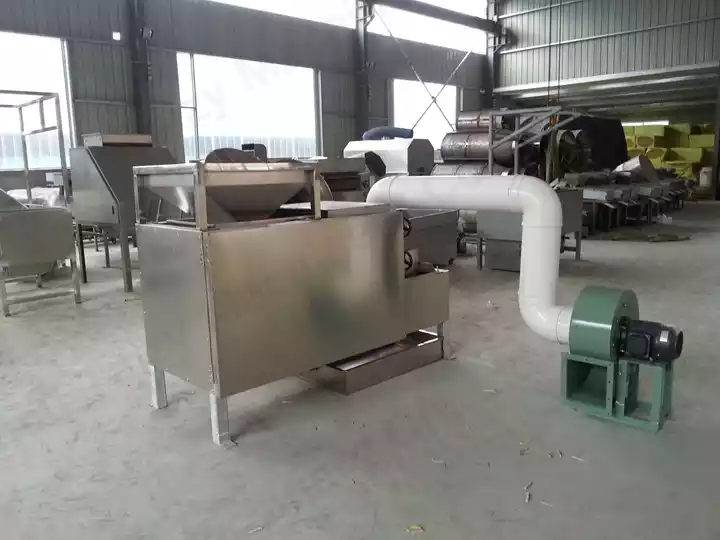
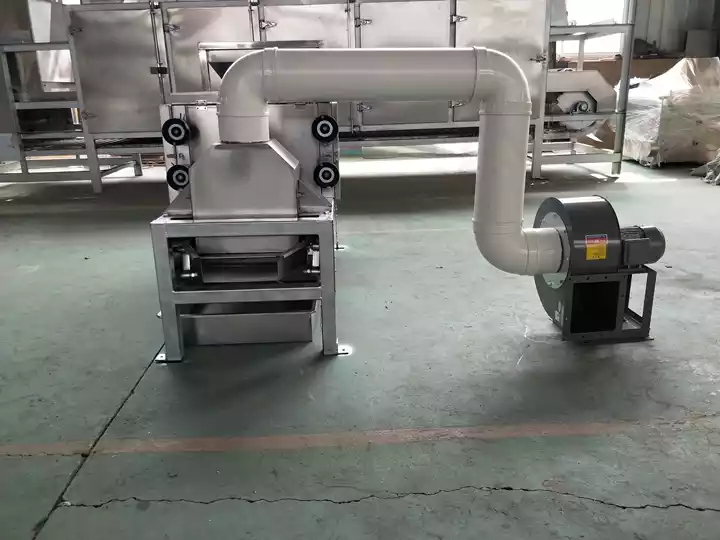
A peeling machine with a high peeling rate (typically above 95%) ensures that most skins are stripped away. In a complete peanut butter production line, the peeling machine is positioned right after the cooling belt and before the peanut butter grinding machine, ensuring that only clean, skinless kernels enter the grinding stage for a finer, more uniform paste.
Use a Colloid Mill as Your Peanut Butter Grinding Machine
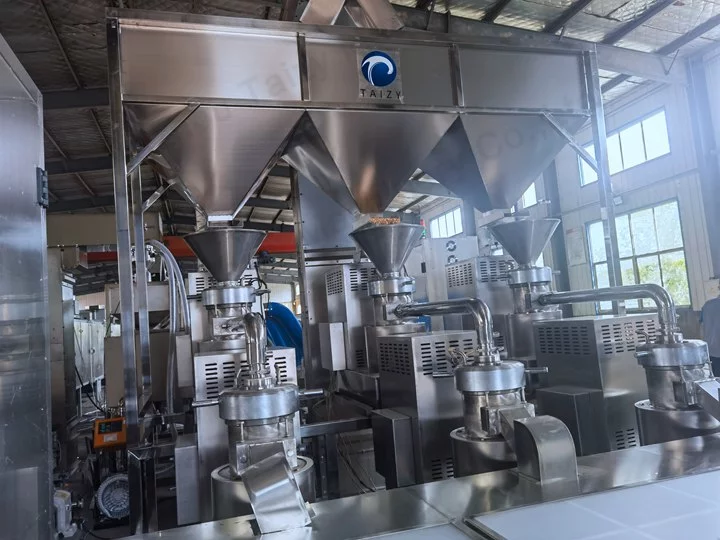
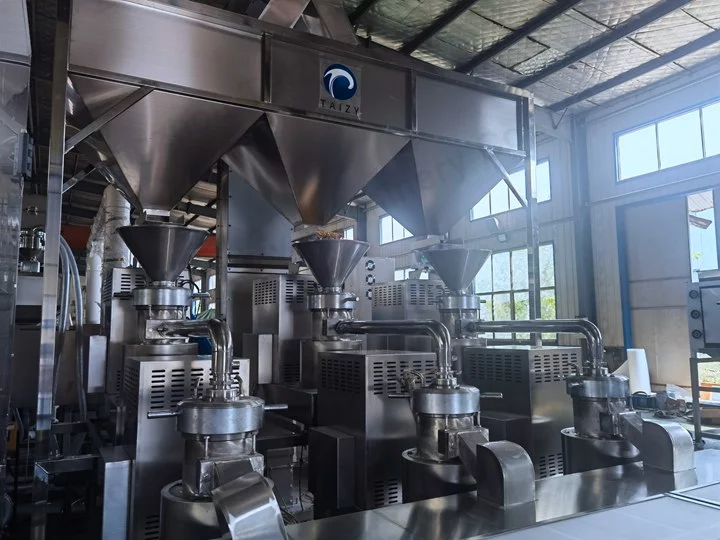
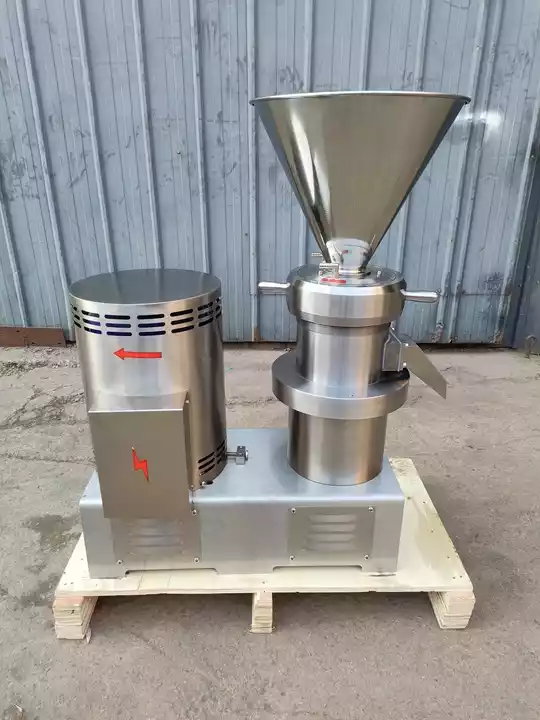
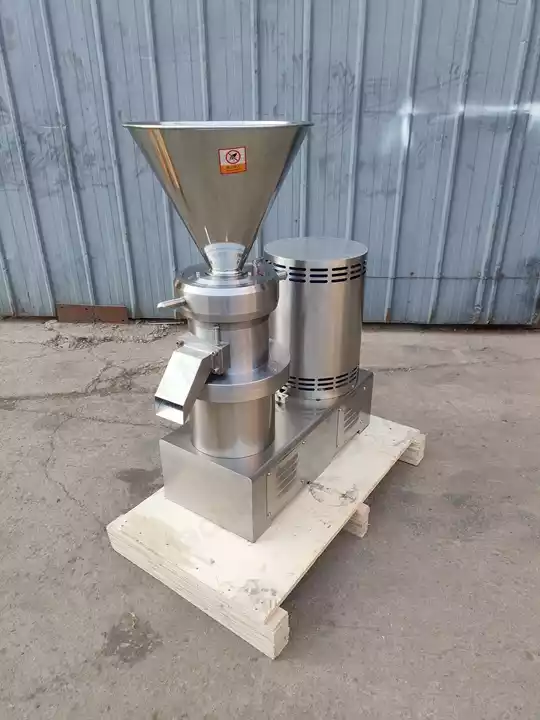
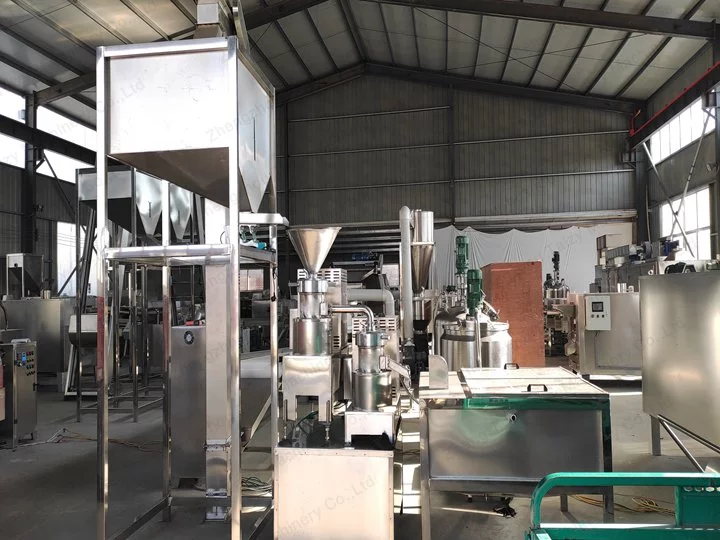
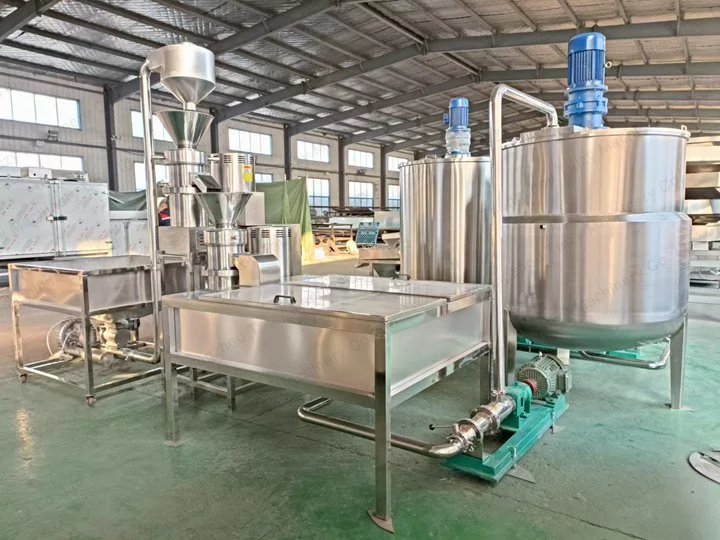
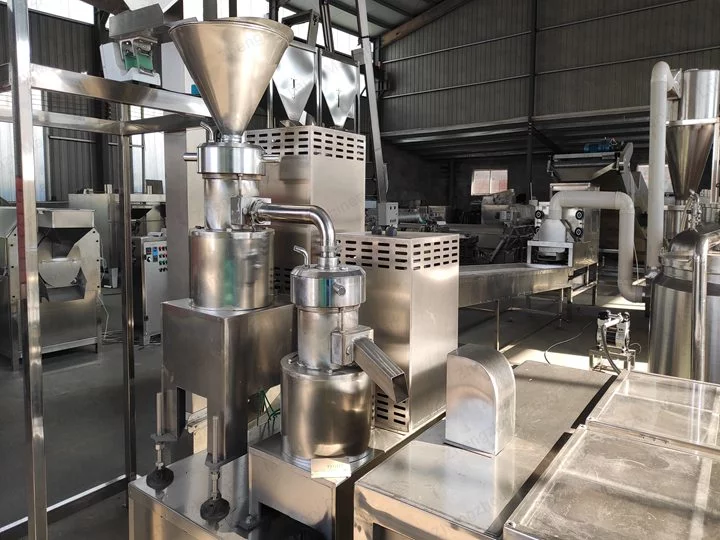
The peanut butter grinding machine — typically a colloid mill — is the core equipment that determines the fineness and creaminess of the final product. A colloid mill uses a high-speed rotor and a stator with an adjustable gap (usually 0.1–5 mm) to shear, grind, and homogenize the peanut particles into an ultra-fine paste.
The grinding fineness of a quality colloid mill can reach 2–50 microns, which is fine enough to produce a smooth, creamy mouthfeel. The smaller and more uniform the particle size, the creamier the peanut butter feels on the palate.
For manufacturers targeting premium smooth peanut butter, a stainless steel peanut butter grinding machine with an adjustable grinding gap and high-speed rotation (2,800–3,600 rpm) is the standard choice.
Adjust the Grinding Gap for Different Fineness Levels
One advantage of using a colloid mill as your peanut butter grinding machine is the ability to adjust the grinding gap. A smaller gap produces finer particles and a creamier texture, while a larger gap allows for a chunky or crunchy style.
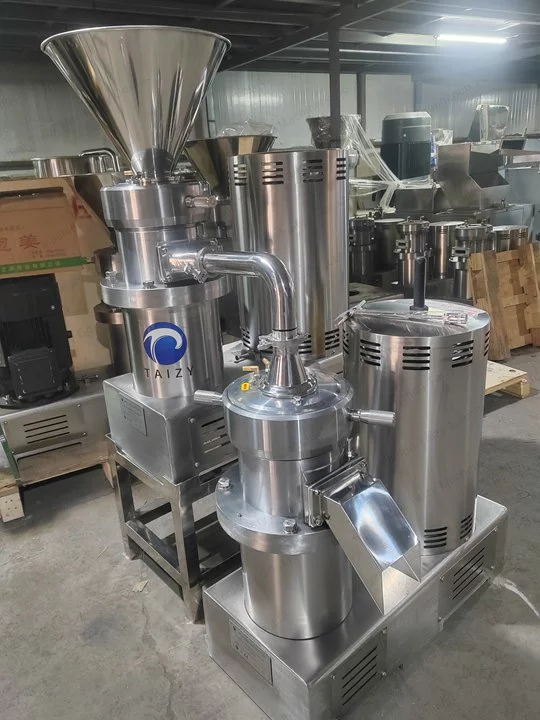
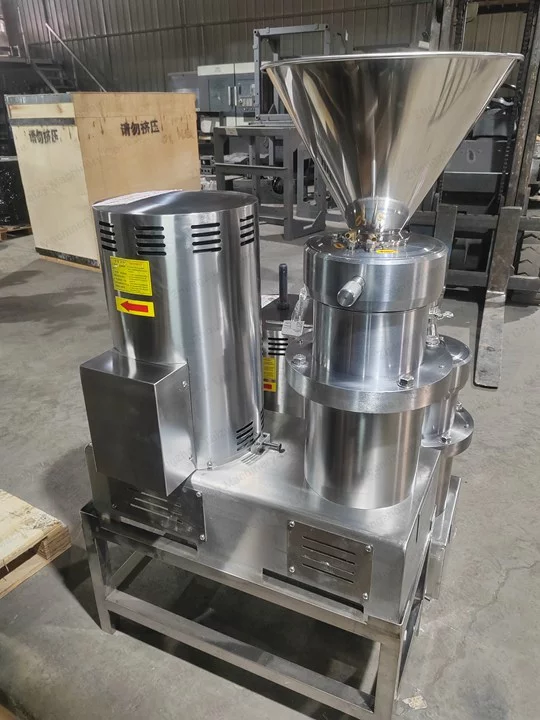
For maximum smoothness, manufacturers can set the gap to its minimum and run the peanut paste through the peanut butter grinding machine for a second pass. Double-stage grinding — a coarse grind followed by a fine grind — is a standard configuration in our peanut butter production line, significantly improving the fineness and consistency of the final product.
Control Peanut Butter Temperature During Grinding
Grinding generates friction and heat. If the peanut butter temperature rises too high during processing, the peanut oil can separate prematurely, and the proteins may denature, affecting both texture and flavor.
Most industrial colloid mills include a cooling water jacket that circulates chilled water around the grinding chamber. Maintaining the peanut butter discharge temperature below 70°C helps preserve the emulsion structure, resulting in a smoother, more stable, and creamier product.
A well-cooled peanut butter grinding machine ensures that the paste remains homogeneous and that oil separation is minimized during storage.
Add Stabilizers and Homogenize for Long-Lasting Creaminess
Even with a high-quality grind, natural peanut butter can experience oil separation over time. Adding a small amount of stabilizer — such as hydrogenated rapeseed oil, palm oil, or mono- and diglycerides — helps keep the oil and solids emulsified.
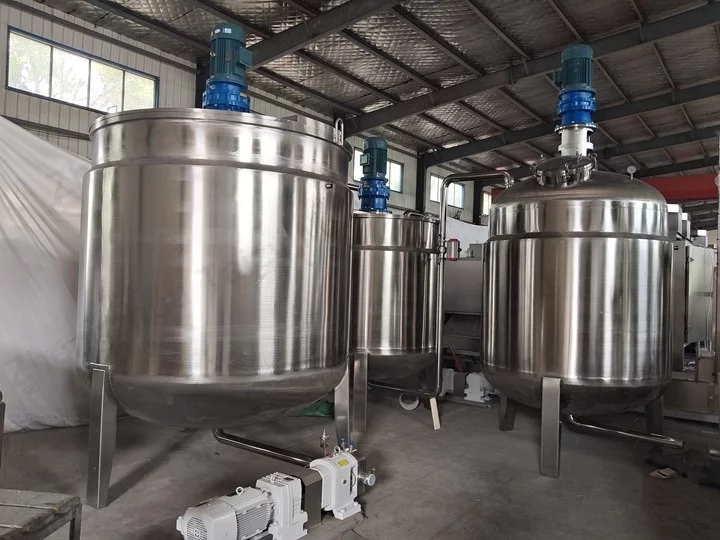
After adding the stabilizer, the peanut butter should pass through a homogenizer or be circulated back through the peanut butter grinding machine for thorough mixing. In our peanut butter production line, a mixing tank with a homogenizing function is integrated after the grinding stage, ensuring the stabilizer is evenly distributed throughout the paste and producing a creamy texture that lasts from the jar to the shelf.
Use a Vacuum Degassing Tank to Remove Air Bubbles
During grinding and mixing, air can become trapped in the peanut butter, creating a foamy or aerated texture that reduces the perception of creaminess. A vacuum degassing tank removes trapped air from the paste before filling.
When the degassed peanut butter is filled into jars, it appears dense, smooth, and glossy — the visual and textural qualities consumers associate with premium creamy peanut butter. Integrating a vacuum degasser after the peanut butter grinding machine is a proven method for improving product appearance and mouthfeel.
A Complete Peanut Butter Production Line Makes the Difference
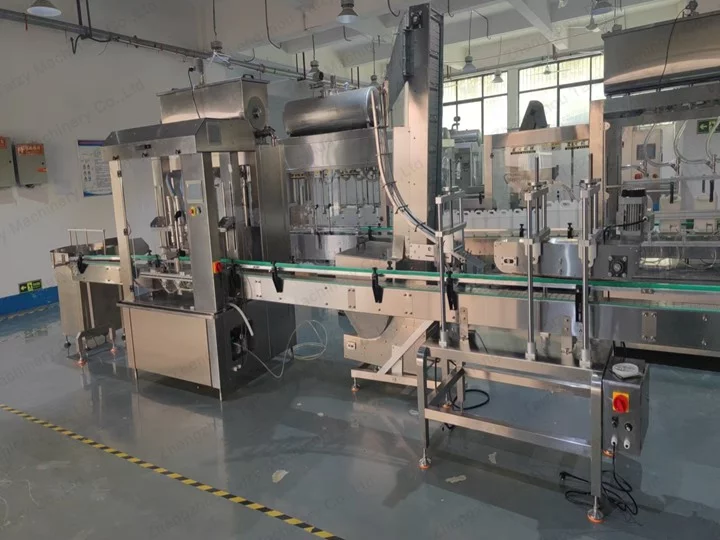
Achieving consistently smooth and creamy peanut butter is not just about a single grinder — it requires a well-coordinated 花生酱生产线. Each piece of equipment plays a role in the final texture and quality:
- Roasting machine: Reduces moisture and develops flavor for better grindability.
- Cooling belt: Rapidly cools roasted peanuts to prevent over-roasting and oil release.
- Peeling machine: Removes skins and hearts for a cleaner, smoother paste.
- Coarse grinding machine: Pre-grinds peeled peanuts into a rough paste.
- Peanut butter grinding machine (colloid mill): Fine-grinds the paste to 2–50 microns for a creamy texture.
- Mixing tank with homogenizer: Blends in stabilizers and ensures uniform emulsion.
- Vacuum degassing tank: Removes trapped air for a dense, glossy finish.
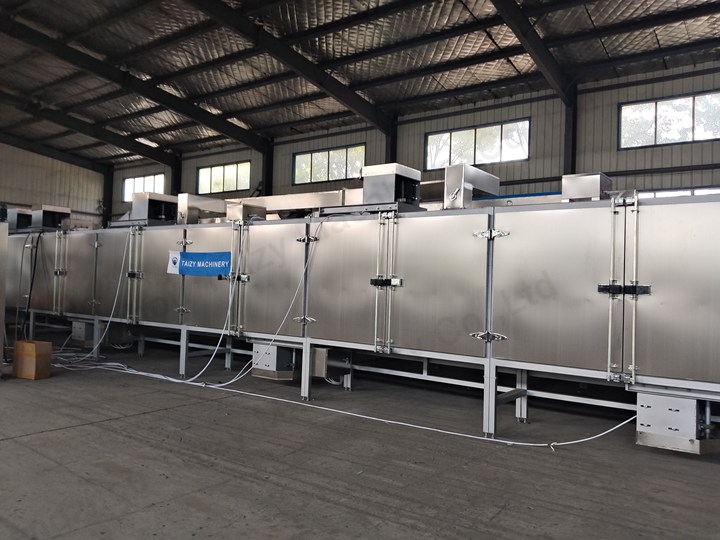
- Cooling machine: Lowers paste temperature before filling to stabilize the emulsion.
- Filling machine: Automatically fills jars with precise weight control.
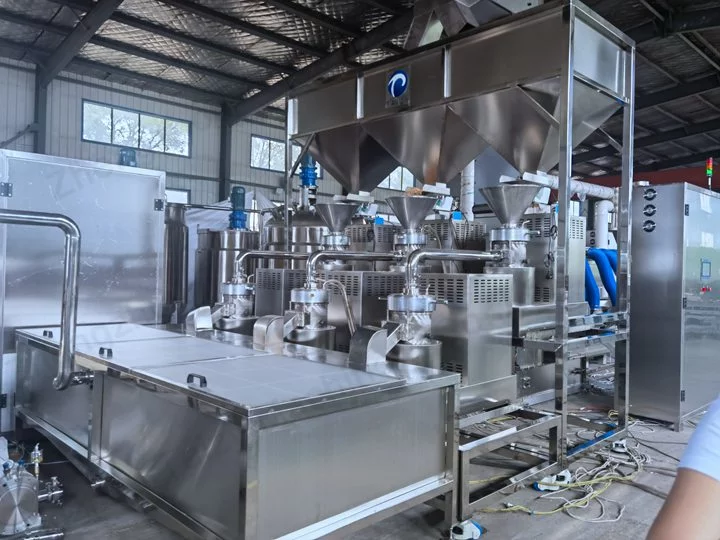
A fully integrated peanut butter production line ensures that every batch meets the same smoothness, creaminess, and quality standard — whether you produce 500 kg or 5,000 kg per day.

Ready to Upgrade Your Peanut Butter Production?
Smooth, creamy peanut butter starts with the right equipment — and the right supplier. Whether you are building a new peanut butter production line from scratch or upgrading your existing grinding stage, we provide complete solutions tailored to your needs.
Our peanut butter production line includes roasting, cooling, peeling, coarse and fine grinding, mixing, degassing, cooling, and filling — all engineered to work together for maximum smoothness and creaminess.
Contact us today for a free consultation and quotation. Send us the following details, and we will respond within 24 hours with a customized equipment recommendation and price:
- Your target daily or hourly output (e.g., 500 kg/h, 1,000 kg/h, 2,000 kg/h)
- Your desired product type (creamy, crunchy, stabilized, organic, etc.)
- Your peanut variety and whether roasting is needed
- Your available workshop space and location
- Any special requirements (CE certification, voltage, packaging type, etc.)
Reach out now and let our engineers help you build a peanut butter production line that delivers the smoothest, creamiest product on the market.